Hi, I’m Kozak.
I work on fusion physics, scientific machine learning, and the awkward gap between a good equation and code that runs fast enough.
At the University of Tokyo, I’m researching physics-informed neural operators for two-dimensional lower-hybrid-wave simulations on the TST-2 spherical tokamak.
Before Tokyo, I studied computational science in London and space science in Taiwan. I also build production software and help engineering teams decide when a learned surrogate is genuinely useful.

Making wave simulations fast enough to explore.
My PhD work asks whether a neural operator can preserve the physics of a lower-hybrid-wave solver while cutting the time needed for each run. The current scheme reaches 281.8× faster inference in a rectangular domain and 25.8× in TST-2 circular geometry.
Read the projectA few problems I’ve spent real time on.
Research papers, production experiments, and the numerical details in between.
Making lower-hybrid-wave simulation fast enough to iterate on
A physics-informed neural-operator surrogate for TST-2, with a 498 MB footprint and up to 281.8× faster inference.
PhD research · fusion plasma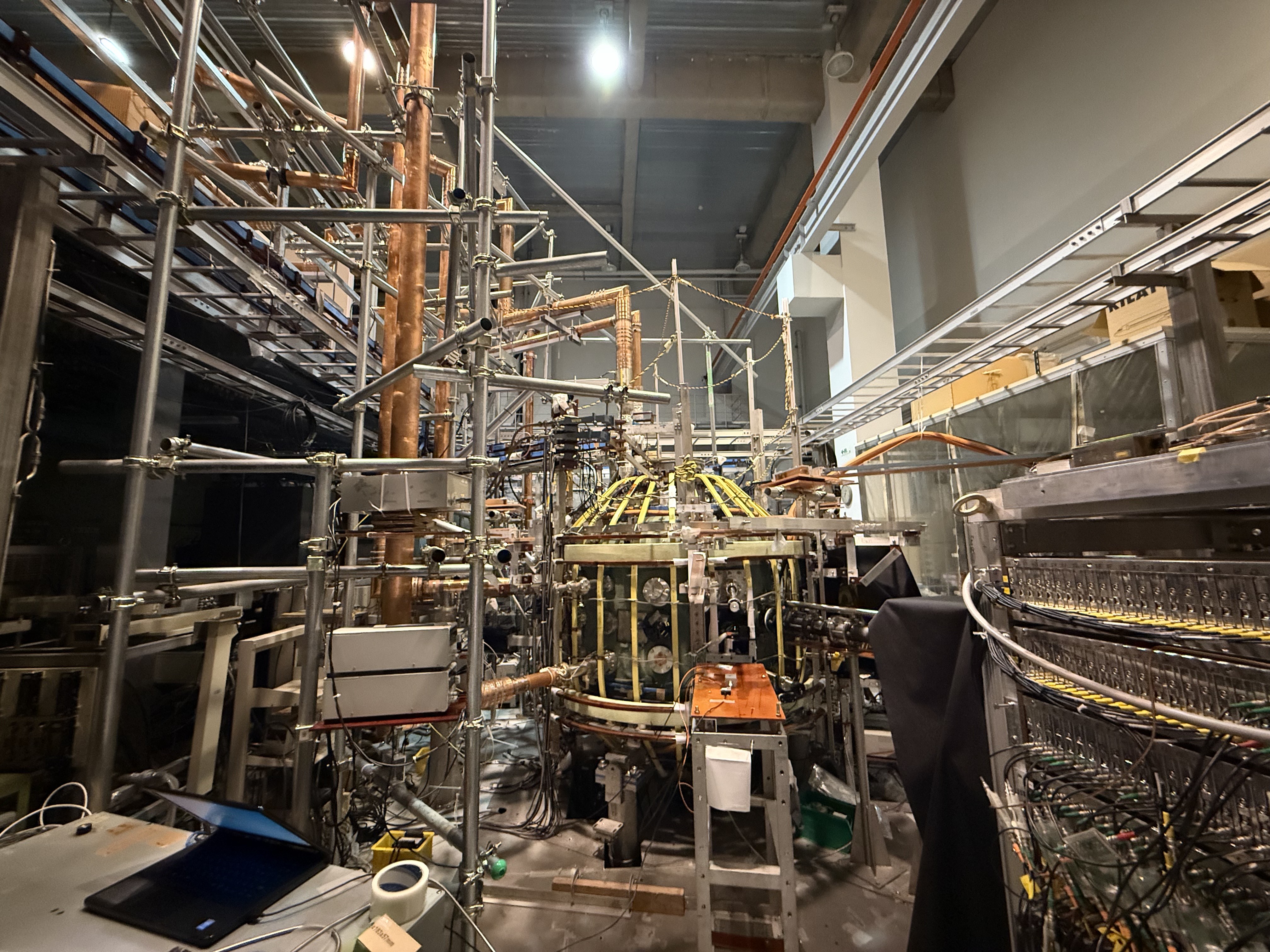
Replacing hours of mold-flow simulation with seconds of inference
A Fourier neural operator for non-Newtonian fluid dynamics, tested against a production simulation workflow at under 3% error.
Industry R&D · operator learning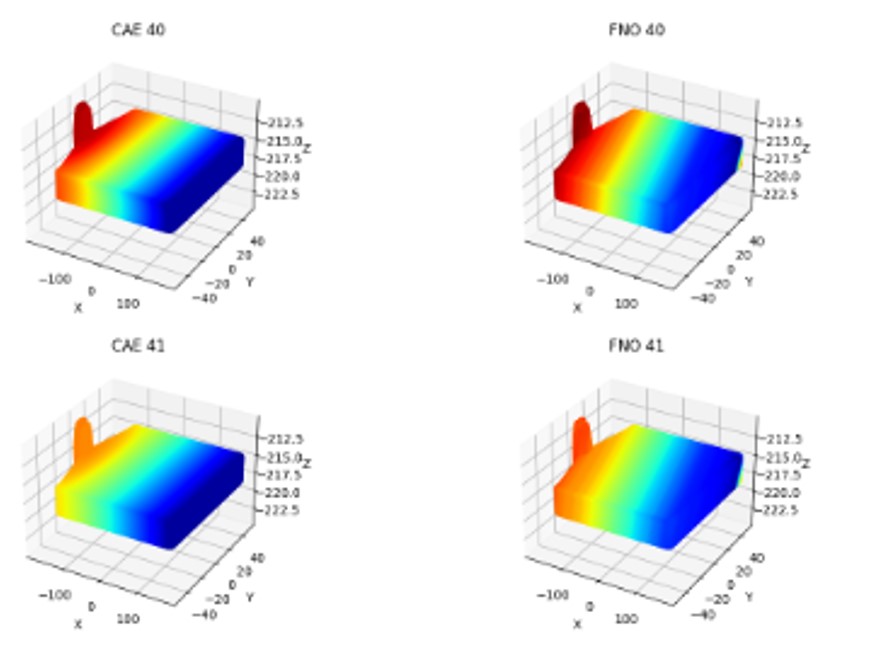
Teaching a neural network where the magnetopause ought to be
Reg-PINNs combine an empirical physics model with a neural network and reduce RMSE by roughly 30% over Shue et al. [1998].
Published research · space physics
Taiwan → London → Tokyo
The subjects changed along the way. The habit of moving between physics and software did not.
- Japan University of Tokyo PhD · nuclear fusion research
- UK Imperial College London MSc · applied computational science
- Taiwan National Central University BSc · space science & engineering